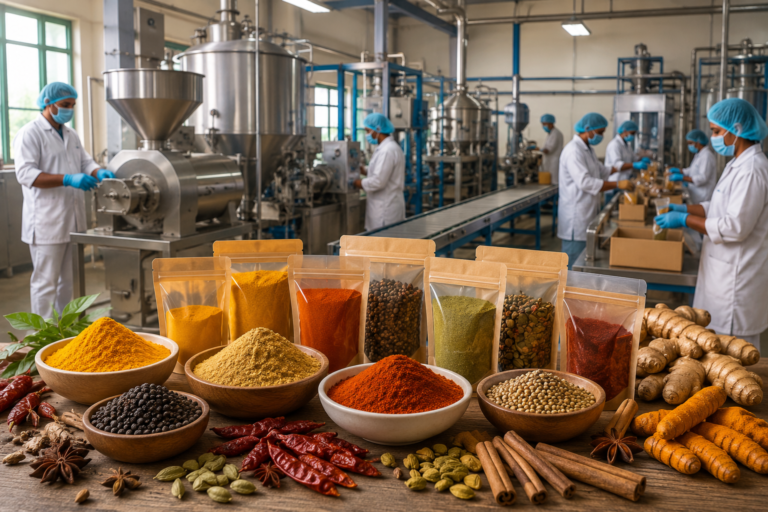
Starting a business often requires significant capital, which can be challenging for first-time entrepreneurs. To encourage self-employment and promote small business development across India, the Government of India launched the Prime Minister’s Employment Generation Programme (PMEGP). This flagship credit-linked subsidy scheme helps aspiring entrepreneurs establish manufacturing and service enterprises by providing financial assistance through banks and government subsidies.
In 2026, PMEGP continues to be one of the most attractive schemes for individuals looking to start their own business with limited investment. The scheme not only provides financial support but also encourages employment generation in rural and urban areas.
Whether you are planning to establish a manufacturing unit, food processing business, packaging unit, service center, or retail enterprise, PMEGP can significantly reduce your financial burden through subsidy benefits.
This guide explains the PMEGP Scheme 2026, eligibility requirements, subsidy structure, application process, project costs, profitability estimates, and why preparing a professional project report is essential for successful loan approval.
What is PMEGP Scheme 2026?
PMEGP stands for Prime Minister’s Employment Generation Programme. It is a government-backed scheme implemented by the Khadi and Village Industries Commission (KVIC).
The objective of the scheme is to:
- Promote entrepreneurship
- Generate sustainable employment
- Support first-generation entrepreneurs
- Encourage rural and urban industrialization
- Reduce unemployment
The scheme offers financial assistance through bank loans combined with government subsidies.
PMEGP Scheme 2026 Key Highlights
| Particular | Details |
|---|---|
| Scheme Name | Prime Minister’s Employment Generation Programme |
| Implementing Agency | KVIC |
| Target Beneficiaries | New Entrepreneurs |
| Sector Coverage | Manufacturing and Services |
| Loan Type | Bank Linked Loan |
| Government Subsidy | Available |
| Area Coverage | Rural and Urban India |
Market Opportunity for PMEGP Businesses
India’s MSME sector remains one of the strongest contributors to economic growth.
MSME Sector Snapshot
| Indicator | Estimated Value |
| Total MSMEs | Over 6 Crore |
| GDP Contribution | Around 30% |
| Manufacturing Contribution | Around 17% |
| Employment Generated | More than 11 Crore Jobs |
| Export Contribution | Nearly 45% |
These figures indicate strong opportunities for entrepreneurs planning to launch businesses under PMEGP.
Eligibility Criteria for PMEGP Scheme 2026
Applicants must fulfill certain eligibility requirements.
Individual Eligibility
- Minimum age should be 18 years.
- Applicant should be an Indian citizen.
- New business ventures are eligible.
- Existing units are not eligible.
- For projects above specified limits, minimum educational qualification of Class 8 may be required.
Eligible Organizations
- Self Help Groups
- Registered Societies
- Production Cooperative Societies
- Charitable Trusts
- Institutions registered under applicable laws
PMEGP Subsidy Structure 2026
One of the biggest advantages of PMEGP is the government subsidy offered on the project cost.
Subsidy Benefits
| Category | Rural Area | Urban Area |
| General Category | 25% | 15% |
| Special Category* | 35% | 25% |
*Special category includes women, SC, ST, OBC, minorities, ex-servicemen, physically challenged applicants, and applicants from aspirational districts.
The subsidy amount reduces the effective financial burden on entrepreneurs.
How to Apply for PMEGP Scheme 2026
The application process is straightforward when all documents are properly prepared.
Step 1
Choose a suitable business idea.
Step 2
Prepare a Detailed Project Report (DPR).
Step 3
Collect required documents.
Documents generally include:
- Aadhaar Card
- PAN Card
- Educational certificates
- Project report
- Address proof
- Category certificate if applicable
Step 4
Submit application through the PMEGP portal.
Step 5
Application scrutiny by implementing agencies.
Step 6
Bank appraisal and loan sanction.
Step 7
Entrepreneurship Development Program training.
Step 8
Loan disbursement and subsidy release.
Machinery Required
Machinery requirements depend on the selected business. Below is an example of a small manufacturing unit.
| Machinery | Estimated Cost (₹) |
| Production Machine | 4,50,000 |
| Packaging Machine | 1,50,000 |
| Weighing Equipment | 50,000 |
| Testing Equipment | 75,000 |
| Material Handling Equipment | 75,000 |
Total Machinery Cost: ₹8,00,000
Raw Materials Required
Raw material requirements vary according to the project.
Sample Monthly Requirement
| Material | Estimated Cost (₹) |
| Primary Raw Material | 1,50,000 |
| Packaging Material | 40,000 |
| Consumables | 25,000 |
| Miscellaneous Supplies | 15,000 |
Total Monthly Raw Material Cost: ₹2,30,000
Setup Budget in Three Different Levels
Level 1 Small Business Setup
Suitable for first-time entrepreneurs.
| Particulars | Cost (₹) |
| Machinery | 5,00,000 |
| Raw Material | 2,00,000 |
| Working Capital | 2,00,000 |
| Miscellaneous Expenses | 1,00,000 |
Total Project Cost
₹10,00,000
Level 2 Medium Business Setup
Suitable for growth-oriented businesses.
| Particulars | Cost (₹) |
| Machinery | 10,00,000 |
| Infrastructure | 3,00,000 |
| Raw Material | 4,00,000 |
| Working Capital | 3,00,000 |
Total Project Cost
₹20,00,000
Level 3 Advanced Business Setup
Suitable for higher production capacity.
| Particulars | Cost (₹) |
| Machinery | 18,00,000 |
| Infrastructure | 5,00,000 |
| Raw Material | 7,00,000 |
| Working Capital | 5,00,000 |
Total Project Cost
₹35,00,000
Estimated Cost and Profit Analysis
Below is a sample profitability projection for a manufacturing unit financed under PMEGP.
Monthly Financial Estimate
| Particulars | Amount (₹) |
| Sales Revenue | 6,50,000 |
| Raw Material Cost | 2,30,000 |
| Salary Expense | 90,000 |
| Utilities | 30,000 |
| Other Expenses | 50,000 |
Total Expenses
₹4,00,000
Estimated Monthly Profit
₹2,50,000
Annual Estimate
| Particulars | Amount (₹) |
| Annual Revenue | 78,00,000 |
| Annual Expenses | 48,00,000 |
| Estimated Annual Profit | 30,00,000 |
Actual profitability depends on industry, production capacity, and market demand.
Why You Should Prepare a Professional PMEGP Project Report
A professionally prepared DPR plays a major role in loan approval.
Higher Approval Probability
Banks prefer financially realistic project reports.
Faster Processing
Complete documentation reduces delays.
Accurate Financial Planning
Helps entrepreneurs understand investment requirements.
Better Business Strategy
Provides clear direction for operations and growth.
Improved Credibility
Builds confidence among bankers and government authorities.
Professional project reports often make the difference between approval and rejection.
Why Choose Chemax Consultancy
Preparing a PMEGP project report requires technical expertise, financial planning, and banking knowledge.
Chemax Consultancy helps entrepreneurs with:
- PMEGP Project Reports
- Detailed Financial Projections
- Market Feasibility Studies
- Machinery Planning
- Subsidy Guidance
- Loan Documentation Support
- End-to-End Business Setup Consulting
With years of experience in industrial project consulting, Chemax Consultancy helps businesses create bank-ready reports that improve approval chances and support long-term success.
Frequently Asked Questions
1. Who can apply for PMEGP Scheme 2026?
Any eligible Indian citizen above 18 years planning to start a new manufacturing or service business can apply.
2. Is collateral required under PMEGP?
Collateral requirements depend on RBI and bank guidelines. Many eligible projects receive support under credit guarantee mechanisms.
3. What is the maximum subsidy available under PMEGP?
The subsidy varies based on category and location, ranging from 15% to 35% of the eligible project cost.
4. Can existing businesses apply for PMEGP?
No. The scheme is intended for new business ventures only.
5. Why is a DPR important for PMEGP loan approval?
A DPR demonstrates business viability, financial feasibility, and repayment capability, making it one of the most important documents during loan evaluation.
Conclusion
The PMEGP Scheme 2026 remains one of the most powerful government initiatives for aspiring entrepreneurs in India. With attractive subsidy benefits, bank-linked financing, and support for manufacturing and service enterprises, the scheme offers an excellent opportunity to start and grow a successful business.
However, obtaining approval depends heavily on proper planning, realistic financial projections, and a professionally prepared Detailed Project Report. A strong DPR not only improves approval chances but also serves as a roadmap for long-term business growth.
If you are planning to apply under PMEGP and need expert assistance with project reports, financial planning, subsidy guidance, or business setup support, Chemax Consultancy can help you navigate the process with confidence and maximize your chances of success.
Contact Chemax Consultancy today and take the first step toward building a profitable and sustainable business under PMEGP Scheme 2026.