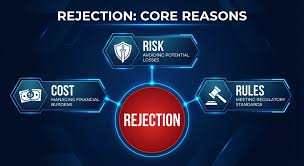
A feasibility study is one of the most important documents for any entrepreneur seeking investment, bank finance, or business expansion. It helps investors evaluate whether a project is technically possible, financially viable, and capable of generating sustainable profits. A well-prepared feasibility study gives investors confidence, while a poorly prepared one often results in immediate rejection.
Many startups and MSMEs believe that presenting a good business idea is enough to secure funding. In reality, investors focus on facts, market research, financial projections, risk assessment, and implementation planning before making any investment decision. Even a promising business can lose funding opportunities if its feasibility study lacks accurate data or realistic assumptions.
Why Is a Feasibility Study Important?
A feasibility study helps determine whether a proposed business project is worth investing in. It evaluates every critical aspect of the business before large amounts of money are committed.
Investors Usually Check
| Evaluation Area | Why It Matters |
|---|---|
| Market Demand | Confirms customer demand for the product |
| Financial Analysis | Measures profitability and cash flow |
| Technical Feasibility | Ensures the project can be executed successfully |
| Operational Planning | Verifies production and business operations |
| Risk Assessment | Identifies potential business risks |
| Return on Investment | Determines expected investor returns |
If any of these sections are weak or incomplete, investors may reject the proposal regardless of how innovative the business idea is.
Market Data
Businesses supported by verified market research are far more likely to attract investors.
Key Statistics
| Indicator | Data |
| Investors review financial projections before funding | 95% |
| Investors reject proposals due to weak market research | Nearly 70% |
| Businesses with detailed feasibility studies have higher funding success | Significantly higher than those without structured reports |
Visual Insight
Top Reasons for Rejection

Weak Financial Planning      ██████████████
Poor Market Research         ████████████
No Risk Assessment           ██████████
Weak Technical Planning      █████████
Unclear ROI                  ████████
The chart shows that financial planning and market research remain the biggest concerns for investors.
Reason 1. Unrealistic Financial Projections
One of the biggest mistakes entrepreneurs make is presenting financial projections that are too optimistic. Investors have years of experience reviewing business proposals and can quickly identify unrealistic assumptions.
Some common examples include:
- Extremely high sales projections during the first year
- Very low operating expenses
- Ignoring inflation and maintenance costs
- Unrealistic profit margins
- No contingency planning
For example, a startup food processing unit estimating annual sales of ₹10 crore within its first year, despite having no established distribution network, will raise serious concerns.
Instead, investors prefer financial projections based on:
- Verified industry data
- Conservative revenue estimates
- Realistic production capacity
- Cash flow analysis
- Break-even calculations
Reason 2. Poor Market Research
A great product alone does not guarantee business success. Investors need evidence that customers are willing to buy your product.
Many feasibility studies contain vague statements such as:
- The market is growing rapidly.
- Demand is increasing.
- Customers will purchase our product.
These statements have little value unless supported by reliable data.
A strong market analysis should include:
- Industry size
- Market growth trends
- Customer segments
- Competitor analysis
- Pricing strategy
- Demand forecast
- Geographic opportunities
Reason 3. Ignoring Business Risks
Every business faces risks. Investors know this. What matters is whether you have identified these risks and developed practical solutions.
Many feasibility studies focus only on profits while completely ignoring possible challenges.
Common risks include:
- Raw material price fluctuations
- Regulatory changes
- Labour shortages
- Supply chain disruptions
- Technology failures
- Market competition
Risk Assessment Example
| Risk | Mitigation Plan |
| Raw material cost increase | Multiple approved suppliers |
| Equipment breakdown | Preventive maintenance schedule |
| Market competition | Product differentiation and quality improvement |
| Cash flow shortage | Working capital reserve |
Including a risk assessment shows investors that your business is prepared for uncertainties rather than relying on optimistic assumptions.
Reason 4. Weak Technical Feasibility
A business idea may look profitable on paper, but investors also want to understand how the project will be executed. This is where technical feasibility plays an important role.
Many feasibility studies fail because they provide financial estimates without explaining the production process, infrastructure, or operational requirements.
A technically sound feasibility study should include:
- Manufacturing or production process
- Plant layout and workflow
- Machinery and equipment details
- Utility requirements such as electricity, water, and fuel
- Production capacity
- Manpower requirements
- Quality control process
If these details are missing, investors may conclude that the project has not been planned properly.
Machinery Required for Preparing a Professional Feasibility Study
Although a feasibility study itself does not require machinery, a manufacturing project should clearly mention the proposed equipment. A typical report should include:
| Machinery Details | Purpose |
|---|---|
| Production Machines | Manufacturing products |
| Packing Machine | Packaging finished goods |
| Quality Testing Equipment | Product quality assurance |
| Material Handling Equipment | Internal transportation |
| Utility Equipment | Power backup, compressors, water systems |
Providing detailed machinery specifications helps investors estimate production capacity and project viability.
Reason 5. No Clear Return on Investment
Every investor asks one important question before investing:
“When will I recover my investment and start earning profits?”
If your feasibility study does not clearly answer this question, your proposal may not move forward.
A professional feasibility report should include:
- Total project cost
- Revenue projections
- Operating expenses
- Gross profit
- Net profit
- Break-even point
- Payback period
- Return on Investment (ROI)
Typical Raw Materials Considered in a Manufacturing Feasibility Study
The raw material section varies according to the industry. However, most manufacturing feasibility reports include:
- Primary raw materials
- Packaging materials
- Chemicals or additives (where applicable)
- Consumables
- Spare parts
- Fuel and utilities
Clearly identifying reliable suppliers and estimating procurement costs increases investor confidence.
Setup Budget at Three Investment Levels
The investment required depends on the type and scale of the project. The following table provides a general example.
| Investment Level | Estimated Project Cost | Suitable For |
| Small Scale | ₹20–50 Lakh | Startups and Micro Enterprises |
| Medium Scale | ₹50 Lakh–₹2 Crore | MSMEs and Expanding Businesses |
| Large Scale | ₹2 Crore and Above | Large Manufacturing Units |
Note: Actual project costs vary based on industry, machinery, land, utilities, and production capacity.
Estimated Cost and Profit Example
The following is a sample financial illustration for a medium-scale manufacturing unit.
| Particular | Estimated Amount |
| Project Cost | ₹1.20 Crore |
| Working Capital | ₹20 Lakh |
| Annual Sales | ₹2.10 Crore |
| Annual Operating Cost | ₹1.70 Crore |
| Estimated Net Profit | ₹40 Lakh |
| Expected ROI | 20–25% |
| Payback Period | 4–5 Years |
These figures are only indicative. A customized feasibility study provides accurate financial projections based on your specific project.
Investor Ready Checklist
Before submitting your feasibility study, make sure it includes:
✅ Verified market research
✅ Realistic financial projections
✅ Technical feasibility
✅ Machinery and production details
✅ Raw material analysis
✅ Risk assessment
✅ ROI and payback calculations
✅ Professional presentation
A complete and well-structured report significantly improves the chances of investor approval.
Frequently Asked Questions
1. Why do investors reject feasibility studies?
The most common reasons include unrealistic financial projections, poor market research, lack of risk assessment, weak technical planning, and unclear return on investment.
2. How can a professional feasibility study improve funding chances?
A professionally prepared report provides accurate financial analysis, market validation, technical planning, and risk evaluation, making investors more confident in the project.
3. Why choose Chemax Consultancy for feasibility studies?
Chemax Consultancy has extensive experience in preparing investor-ready feasibility studies, DPRs, CMA data reports, subsidy project reports, and project finance documentation for startups, MSMEs, and manufacturing businesses across India.
Conclusion
A feasibility study is much more than a project report. It is a strategic document that demonstrates whether a business idea is practical, profitable, and capable of generating sustainable returns.
Most investor rejections occur because entrepreneurs overlook essential elements such as market validation, financial planning, technical feasibility, and risk management. By addressing these areas with accurate data and realistic assumptions, you can significantly improve your chances of securing investment.