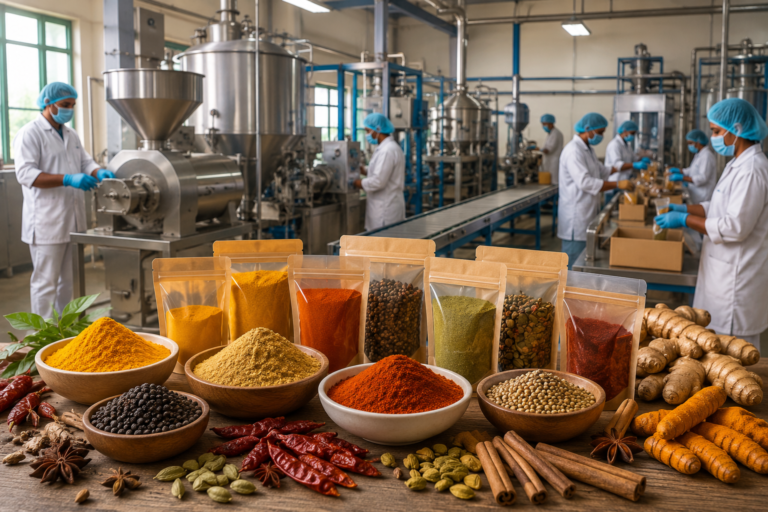
India’s food processing industry is one of the fastest-growing manufacturing sectors, supported by rising consumer demand, government incentives, and increasing exports. However, many entrepreneurs invest in machinery and factory infrastructure without accurately estimating their production capacity. This often leads to underutilized equipment, unnecessary operating costs, delayed deliveries, and reduced profitability.
Plant capacity planning helps manufacturers determine the right production capacity based on market demand, available resources, investment budget, and future business expansion. Whether you are setting up a spice processing plant, dairy unit, fruit processing factory, snack manufacturing unit, or packaged food business, capacity planning is one of the most important decisions before investing.
A well-planned production facility ensures better utilization of machinery, efficient manpower management, lower production costs, and higher customer satisfaction. It also creates confidence among banks and financial institutions when applying for project financing.
Indian Food Processing Industry Market Overview
The Indian food processing sector continues to expand because of changing lifestyles, urbanization, and increasing demand for packaged and ready-to-eat food products.
Food Processing Industry Snapshot
| Industry Indicator | Latest Estimate |
|---|---|
| Contribution to Manufacturing | Around 12% |
| Employment Generated | More than 7 million people |
| Major Segments | Dairy, Fruits, Vegetables, Bakery, Snacks, Spices, Beverages |
| Growth Drivers | Urban population, Food exports, E-commerce, Organized retail |
| Government Support | PMKSY, PMFME, MSME Schemes, NABARD Finance |
What is Plant Capacity Planning in Food Processing
Plant capacity planning is the process of determining how much product a manufacturing unit can produce within a specific period while efficiently utilizing machinery, labor, utilities, and raw materials.
It answers important business questions such as
- How many kilograms or liters should the plant produce every day
- How many machines are required
- How much factory space is needed
- What should be the workforce size
- What investment is required
Proper capacity planning prevents both overinvestment and underinvestment.
Why Plant Capacity Planning is Important
Many first-time entrepreneurs focus only on machinery prices. In reality, production capacity directly affects profitability.
Benefits of Capacity Planning
| Benefit | Business Impact |
|---|---|
| Better Machine Utilization | Reduces idle equipment |
| Lower Manufacturing Cost | Improves profit margins |
| Efficient Workforce Planning | Controls labor expenses |
| Better Inventory Management | Less raw material wastage |
| Easier Loan Approval | Strong financial projections |
| Future Expansion | Simple scaling without major redesign |
Without capacity planning, businesses often purchase oversized machinery that remains underutilized for years, increasing maintenance and depreciation costs.
Factors That Affect Plant Capacity Planning
Every food processing unit has unique production requirements. Professional consultants evaluate multiple technical and financial factors before deciding plant capacity.
The major factors include
1. Market Demand
Production capacity should match expected customer demand rather than estimated maximum output.
2. Product Mix
Manufacturing multiple products requires additional processing lines and storage facilities.
3. Raw Material Availability
Seasonal products such as mangoes, tomatoes, or vegetables require careful production scheduling and storage planning.
4. Production Process
Continuous processing plants usually have higher production efficiency compared to batch production systems.
5. Utility Availability
Power supply, water availability, steam generation, compressed air, and wastewater treatment directly affect production capacity.
6. Future Expansion
A good factory layout should allow future expansion without interrupting ongoing production.
Machinery Required for a Food Processing Plant
The machinery depends on the product category. However, most food processing units require the following equipment.
| Machinery | Purpose |
|---|---|
| Raw Material Washing Machine | Cleaning fruits, vegetables, grains |
| Sorting and Grading Machine | Quality selection |
| Cutting and Slicing Machine | Product preparation |
| Pulverizer or Grinder | Powder production |
| Mixer or Blender | Uniform mixing |
| Steam Boiler | Heating operations |
| Cooking Kettle | Food processing |
| Dryer or Dehydrator | Moisture removal |
| Packaging Machine | Product packing |
| Labeling Machine | Product identification |
| Quality Testing Equipment | Quality control |
| Conveyor System | Material movement |
Modern automated machinery improves production consistency while reducing labor costs and material wastage.
Raw Materials Required
Raw material requirements depend on the product being manufactured. Common materials include
| Product Category | Major Raw Materials |
|---|---|
| Spice Processing | Whole spices, salt |
| Fruit Processing | Fresh fruits, sugar |
| Dairy Products | Milk, cultures |
| Snack Manufacturing | Flour, edible oil, spices |
| Pickles | Vegetables, vinegar, edible oil |
| Bakery Products | Flour, yeast, sugar, butter |
Apart from primary ingredients, manufacturers also require
- Packaging materials
- Food-grade additives
- Labels
- Cartons
- Cleaning chemicals
- Quality testing consumables
Estimated Setup Budget
The investment depends on automation level, production capacity, product type, and land availability.
Food Processing Plant Investment Estimate
| Investment Level | Estimated Budget | Suitable For |
|---|---|---|
| Small Scale Unit | ₹20 lakh to ₹50 lakh | Local food brands and startups |
| Medium Scale Unit | ₹50 lakh to ₹2 crore | Regional manufacturers |
| Large Scale Unit | ₹2 crore to ₹10 crore or more | National brands and export-oriented businesses |
Budget Distribution Example
| Expense Head | Approximate Share |
|---|---|
| Land and Building | 30% |
| Plant and Machinery | 35% |
| Utilities | 10% |
| Installation | 8% |
| Working Capital | 12% |
| Licenses and Miscellaneous | 5% |
Choosing the right production capacity ensures that every rupee invested generates maximum operational efficiency and long-term returns.
Estimated Production Cost and Profit
The table below provides a general estimate for a medium-scale food processing unit. Actual figures may vary depending on the product, location, automation level, and raw material prices.
Estimated Cost and Profit
| Particular | Estimated Value |
|---|---|
| Daily Production Capacity | 2,000 kg |
| Monthly Production | 50 to 55 tonnes |
| Average Selling Price | ₹90 to ₹180 per kg |
| Monthly Revenue | ₹45 lakh to ₹90 lakh |
| Monthly Operating Cost | ₹35 lakh to ₹70 lakh |
| Estimated Monthly Profit | ₹8 lakh to ₹18 lakh |
| Average Profit Margin | 15% to 25% |
Note: These estimates are indicative. A Detailed Project Report (DPR) and financial feasibility study provide more accurate projections based on your product and business model.
Common Capacity Planning Mistakes
Many first-time entrepreneurs make planning errors that increase operating costs and reduce profitability.
Common Mistakes to Avoid
| Mistake | Impact on Business |
|---|---|
| Buying oversized machinery | Higher investment and low utilization |
| Ignoring future expansion | Expensive modifications later |
| Incorrect demand forecasting | Overstock or idle production |
| Poor factory layout | Reduced efficiency |
| Underestimating utility requirements | Production interruptions |
| No working capital planning | Cash flow issues |
| Lack of quality control planning | Product rejection and customer complaints |
Avoiding these mistakes can significantly improve production efficiency and long-term profitability.
Plant Capacity Planning Workflow
The following flow shows.
Market Research
        │
        ▼
Demand Estimation
        │
        ▼
Product Selection
        │
        ▼
Capacity Calculation
        │
        ▼
Machinery Selection
        │
        ▼
Plant Layout Design
        │
        ▼
Utility Planning
        │
        ▼
Financial Feasibility
        │
        ▼
Project Report Preparation
        │
        ▼
Bank Loan and Plant Setup
This structured approach reduces project risks and helps ensure smooth plant operations from day one.
Frequently Asked Questions
1. What is plant capacity planning in food processing?
Plant capacity planning is the process of determining the optimum production capacity of a food processing unit based on market demand, machinery, raw materials, workforce, utilities, and available investment. It helps improve productivity while reducing unnecessary costs.
2. Why is plant capacity planning important before starting a food processing business?
Capacity planning helps entrepreneurs choose the right machinery, estimate investment accurately, optimize production, improve resource utilization, and increase profitability. It also strengthens project reports submitted to banks and investors.
3. How much investment is required for a food processing plant?
The investment depends on the product and production capacity.
- Small-scale unit: ₹20 lakh to ₹50 lakh
- Medium-scale unit: ₹50 lakh to ₹2 crore
- Large-scale unit: ₹2 crore to ₹10 crore or more
A Detailed Project Report provides the most accurate investment estimate.
Conclusion
Plant capacity planning is one of the most important steps in establishing a successful food processing business. It helps entrepreneurs determine the right production capacity, optimize machinery utilization, manage operating costs, and achieve sustainable business growth. Investing time in proper planning before setting up the plant can prevent costly mistakes and improve long-term profitability.
Whether you are planning a spice processing unit, dairy plant, snack manufacturing facility, bakery, fruit processing plant, or packaged food business, a professionally prepared capacity plan provides a solid foundation for success.
Contact Chemax Consultancy today to turn your food processing business idea into a profitable manufacturing venture.