Selecting the right plant layout is one of the most important decisions when establishing a new manufacturing unit. A well-designed layout directly impacts production efficiency, operational costs, employee safety, material movement, and future business expansion. Even if a company invests in modern machinery and skilled manpower, an inefficient factory layout can reduce productivity and increase operating expenses.
Whether you are planning to establish a food processing plant, pharmaceutical unit, chemical manufacturing facility, packaging factory, engineering workshop, or FMCG production unit, your plant layout serves as the foundation of your operations. It determines how raw materials enter the factory, how products move through different production stages, and how finished goods reach the warehouse.
At Chemax Consultancy, we have worked with businesses across multiple manufacturing sectors and understand that every project requires a customized layout based on production capacity, product type, compliance requirements, and investment budget.
This guide explains how to choose the right plant layout for a new manufacturing unit, the machinery and raw material planning involved, estimated setup budgets, expected profitability, and the key factors every entrepreneur should consider before investing.
Why Plant Layout Matters in Manufacturing
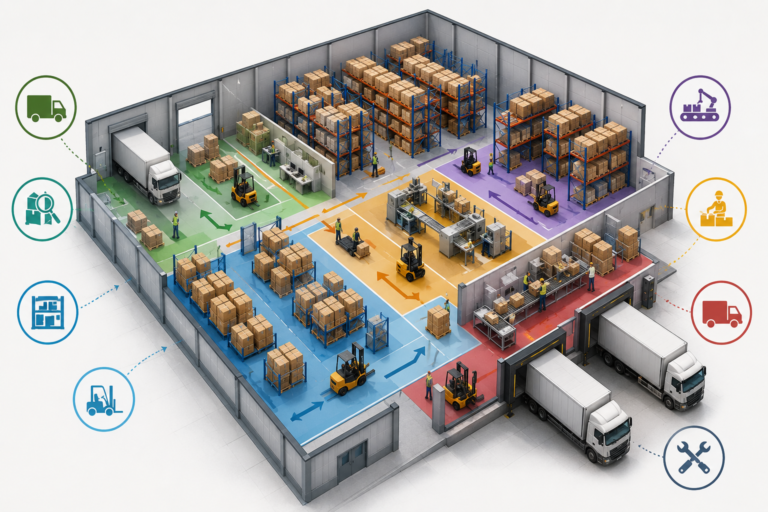
Plant layout is the physical arrangement of machines, workstations, storage areas, utilities, offices, and material handling systems inside a manufacturing facility.
A good layout helps businesses achieve
- Higher production efficiency
- Lower operational costs
- Faster material movement
- Better quality control
- Improved worker safety
- Easier maintenance
- Room for future expansion
On the other hand, poor layout planning often leads to production delays, unnecessary labor movement, equipment congestion, and increased manufacturing costs.
Types of Manufacturing Plant Layouts
| Plant Layout Type | Best For | Key Advantage |
|---|---|---|
| Product Layout | Mass production | High production speed |
| Process Layout | Multiple product types | Greater flexibility |
| Fixed Position Layout | Heavy engineering projects | Product remains stationary |
| Cellular Layout | Medium volume manufacturing | Reduced handling time |
| Hybrid Layout | Modern factories | Combines efficiency with flexibility |
Product Layout
Machines are arranged according to the production sequence. This layout works well for industries manufacturing identical products in large quantities.
Examples include
- Bottled water plants
- Biscuit manufacturing
- Packaging units
- Automobile assembly
Process Layout
Machines performing similar operations are grouped together.
Suitable for
- Job work industries
- Machine shops
- Textile processing
- Fabrication units
Cellular Layout
Products are manufactured in dedicated work cells.
Benefits include
- Reduced transportation
- Faster production
- Better quality management
Key Factors to Consider Before Choosing a Plant Layout
1. Nature of the Product
The manufacturing process largely determines the ideal layout.
For example
- Continuous production favors product layout.
- Customized manufacturing suits process layout.
2. Production Capacity
Estimate
- Daily production
- Monthly demand
- Annual capacity
- Future expansion
Avoid designing a plant only for current demand. Always reserve additional space for future machinery.
3. Material Flow
A properly planned material flow minimizes unnecessary transportation.
Ideal sequence
Raw Material Receiving → Storage → Processing → Quality Check → Packaging → Finished Goods Warehouse → Dispatch
This reduces handling costs while improving productivity.
4. Machinery Placement
Heavy equipment should be positioned to
- Reduce vibration
- Improve maintenance access
- Ensure operator safety
- Minimize production bottlenecks
5. Utility Planning
Manufacturing units require utilities such as
- Electricity
- Water supply
- Steam
- Compressed air
- Drainage
- Waste disposal
- Ventilation
These should be incorporated during layout planning rather than added later.
6. Compliance Requirements
A professionally designed plant layout also considers
- Fire safety
- Pollution control
- Factory regulations
- Worker safety
- Emergency exits
- Storage standards
Proper compliance reduces legal risks and improves operational reliability.
Machinery Required
The machinery varies depending on the industry. However, most manufacturing units require the following categories.
| Machinery | Purpose |
| Production Machines | Manufacturing operations |
| Material Handling Equipment | Movement of goods |
| Packaging Machines | Product packaging |
| Quality Testing Equipment | Inspection and testing |
| Air Compressors | Pneumatic systems |
| Electrical Panels | Power distribution |
| Utility Systems | Water and process utilities |
| Storage Racks | Inventory management |
Raw Materials Required
Raw materials depend on the product being manufactured.
Examples include
| Industry | Raw Materials |
| Food Processing | Grains, spices, edible oils |
| Packaging | Paper, plastic granules, films |
| Chemicals | Industrial chemicals, solvents |
| Pharmaceuticals | Active ingredients, excipients |
| Engineering | Steel, aluminum, copper |
| Textile | Cotton, polyester, yarn |
Reliable suppliers and proper inventory management are essential to maintain uninterrupted production.
Manufacturing Plant Setup Budget
The investment depends on production capacity, land cost, automation level, and machinery selection.
| Investment Level | Estimated Budget | Suitable For |
| Small Scale | ₹25 Lakhs to ₹75 Lakhs | Startups and MSMEs |
| Medium Scale | ₹75 Lakhs to ₹3 Crore | Growing manufacturers |
| Large Scale | ₹3 Crore to ₹20 Crore+ | Industrial production facilities |
Budget Distribution
| Expense Category | Approximate Share |
| Land and Building | 30% |
| Machinery | 40% |
| Utilities | 10% |
| Licenses and Approvals | 5% |
| Working Capital | 15% |
Note: Costs are indicative and vary based on industry, location, production capacity, automation level, and market conditions.
Estimated Operating Cost and Profit
The profitability of a manufacturing unit depends on production efficiency, market demand, and operational management.
| Particular | Approximate Value |
| Gross Profit Margin | 20% to 40% |
| Net Profit Margin | 8% to 18% |
| Break-even Period | 2 to 5 Years |
| ROI | 18% to 35% annually |
A properly designed plant layout can reduce operational costs by minimizing unnecessary movement, lowering material handling expenses, and improving production efficiency.
Why You Should Set Up a Properly Planned Manufacturing Unit
A professionally designed manufacturing facility offers long-term operational advantages.
Higher Productivity
Optimized workflows reduce idle time and increase production output.
Lower Operating Cost
Efficient material movement reduces labor and transportation expenses.
Better Quality Control
Dedicated inspection areas improve product consistency.
Improved Employee Safety
Proper pathways and equipment spacing reduce workplace accidents.
Easy Future Expansion
Reserved floor space allows businesses to install additional machinery without major reconstruction.
Better Inventory Management
Organized storage areas improve stock control and reduce material losses.
Regulatory Compliance
Well-planned layouts simplify approvals and inspections while supporting environmental and safety standards.
Common Mistakes to Avoid
- Ignoring future expansion requirements
- Purchasing machinery before layout planning
- Poor warehouse planning
- Inadequate ventilation
- Inefficient material flow
- Lack of maintenance space
- Non-compliance with safety regulations
Avoiding these mistakes can significantly improve operational efficiency and reduce long-term costs.
How Chemax Consultancy Helps
Planning a manufacturing unit involves much more than selecting machinery. It requires technical expertise, industry knowledge, financial planning, and regulatory compliance.
Chemax Consultancy provides end-to-end support including
- Project feasibility studies
- Detailed project reports
- Plant layout design
- Machinery selection
- Vendor coordination
- Government approvals
- Factory setup consulting
- Production planning
- Business expansion strategies
With a structured and practical approach, Chemax Consultancy helps entrepreneurs establish efficient manufacturing facilities that are scalable, compliant, and commercially viable.
Frequently Asked Questions
1. What is the best plant layout for a manufacturing unit?
The ideal layout depends on your product, production volume, available space, and future expansion plans. Product layouts suit mass production, while process layouts are better for customized manufacturing.
2. How much does it cost to establish a manufacturing plant in India?
A small manufacturing unit may require an investment of ₹25 lakh to ₹75 lakh, while medium and large-scale projects can range from ₹75 lakh to ₹20 crore or more depending on the industry and automation level.
3. Why is plant layout important?
An efficient plant layout improves productivity, reduces operating costs, minimizes material handling, enhances worker safety, and supports long-term business growth.
4. Can an existing plant layout be modified later?
Yes. However, redesigning an operational factory is usually more expensive than planning an optimized layout before construction begins.
5. Does Chemax Consultancy provide complete manufacturing project support?
Yes. Chemax Consultancy offers complete turnkey consulting services, including project reports, plant layout design, machinery planning, approvals, and implementation support.
Conclusion
Choosing the right plant layout is a strategic investment that influences the success of every manufacturing business. A well-planned layout improves workflow, enhances operational efficiency, reduces production costs, and creates a safer working environment. By carefully evaluating production requirements, machinery placement, material flow, utilities, compliance, and future expansion, businesses can build manufacturing facilities that remain productive and profitable for years.
If you are planning to establish a new manufacturing unit, partnering with experienced consultants can help you avoid costly mistakes and accelerate your project’s success.
Ready to build an efficient and profitable manufacturing facility? Contact Chemax Consultancy today for expert guidance on plant layout planning, project reports, machinery selection, regulatory approvals, and complete turnkey manufacturing solutions.