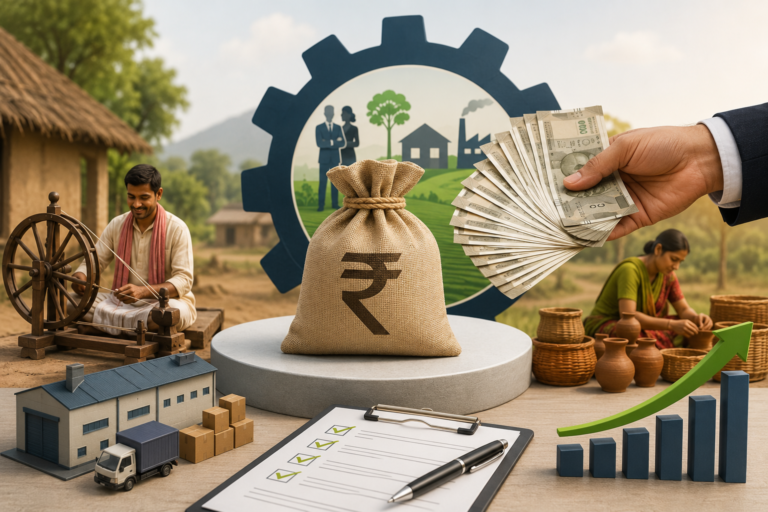
Starting a small manufacturing business requires more than just a great business idea. Whether you plan to manufacture food products, packaging materials, engineering items, or consumer goods, securing adequate funding is one of the first challenges. The Pradhan Mantri Mudra Yojana has made business financing easier for small entrepreneurs by offering collateral-free loans to eligible businesses. However, banks and financial institutions often require a well-prepared Detailed Project Report (DPR) before approving the loan.
A DPR helps lenders understand your business concept, investment requirements, production capacity, financial projections, and repayment ability. It also demonstrates that your business has been carefully planned and is financially viable.
This guide explains how to prepare a DPR for a Mudra Loan, what information should be included, estimated setup costs, machinery requirements, raw materials, and expected profitability. Whether you are a first-time entrepreneur or expanding your manufacturing business, a professionally prepared DPR can significantly improve your chances of loan approval.
India’s Manufacturing Sector at a Glance
India’s manufacturing industry continues to grow due to increasing domestic demand, government incentives, and the Make in India initiative.
| Market Indicator | Current Status |
|---|---|
| Manufacturing Contribution to GDP | Around 17% |
| MSMEs in India | More than 6 crore |
| Employment Generated | Over 24 crore people |
| Mudra Loans Sanctioned | More than 52 crore loans since launch |
| Popular Manufacturing Segments | Food Processing, Packaging, Chemicals, Engineering, Textile, Plastic Products |
Visual Snapshot
Manufacturing Business
        │
        ▼
Business Idea
        │
        ▼
Detailed Project Report
        │
        ▼
Mudra Loan Approval
        │
        ▼
Factory Setup
        │
        ▼
Production Begins
        │
        ▼
Sales & Profit
What is a DPR for Mudra Loan?
A Detailed Project Report (DPR) is a professional document that explains every important aspect of your proposed manufacturing business. Banks use this report to evaluate whether your project is technically feasible and financially sustainable.
A DPR generally includes:
- Business profile
- Manufacturing process
- Market analysis
- Machinery details
- Raw material requirements
- Investment plan
- Working capital requirement
- Sales projections
- Profit estimation
- Break-even analysis
- Loan repayment plan
A professionally prepared DPR increases the confidence of lenders and reduces unnecessary delays during loan processing.
Why is a DPR Important for Small Manufacturers?
Many entrepreneurs believe that applying for a Mudra Loan only requires basic documents. In reality, a comprehensive DPR can make your application much stronger.
A good DPR helps by:
- Presenting your business professionally
- Demonstrating project feasibility
- Estimating realistic investment requirements
- Showing expected revenue and profitability
- Improving bank confidence
- Reducing the chances of loan rejection
- Supporting faster loan processing
It also acts as a roadmap for managing your business after operations begin.
Step-by-Step Guide to Preparing a DPR for Mudra Loan
Step 1. Define Your Business Idea
Clearly explain:
- Product to be manufactured
- Target customers
- Production capacity
- Business objectives
- Manufacturing location
Example:
Instead of writing “plastic products,” specify “manufacturing HDPE plastic containers for industrial packaging.”
Step 2. Conduct Market Research
Banks expect evidence that demand exists for your product.
Include:
- Industry overview
- Market demand
- Customer segments
- Competitor analysis
- Pricing strategy
- Future growth opportunities
Good market research proves that your business has realistic earning potential.
Step 3. Describe the Manufacturing Process
Explain every production stage in simple language.
Example Flow:
Raw Material Procurement
↓
Quality Inspection
↓
Production
↓
Testing
↓
Packaging
↓
Storage
↓
Distribution
This section helps lenders understand operational planning.
Machinery Required
The machinery depends on the manufacturing sector. Below is a general example suitable for many small manufacturing businesses.
| Machinery | Purpose |
| Production Machine | Main manufacturing process |
| Mixing Equipment | Raw material blending |
| Weighing Machine | Accurate measurements |
| Packaging Machine | Product packing |
| Quality Testing Equipment | Inspection |
| Air Compressor | Machine operation |
| Material Handling Equipment | Internal movement |
| Generator or Power Backup | Continuous production |
Always mention machinery specifications, estimated prices, and supplier quotations whenever possible.
Raw Materials Required
The list varies according to the product being manufactured.
Typical examples include:
| Raw Material | Purpose |
| Primary Raw Material | Main product ingredient |
| Packaging Material | Product packaging |
| Labels | Branding |
| Adhesives | Packaging support |
| Chemicals or Additives | Product quality |
| Spare Parts | Maintenance |
| Lubricants | Machinery operation |
Banks prefer realistic estimates supported by supplier quotations whenever available.
Budget Planning at Three Investment Levels
Choosing the right investment level depends on production capacity and business goals.
| Business Scale | Estimated Investment |
| Small Unit | ₹5 lakh to ₹10 lakh |
| Medium Unit | ₹10 lakh to ₹25 lakh |
| Growing Manufacturing Unit | ₹25 lakh to ₹50 lakh |
The budget generally covers:
- Machinery
- Factory setup
- Furniture
- Electrical installation
- Initial raw materials
- Working capital
- Licenses
- Marketing
- Transportation
Estimated Cost and Profit
| Particular | Estimated Amount (Per Month) |
|---|---|
| Monthly Sales | ₹4,00,000 to ₹8,00,000 |
| Production Cost | ₹2,60,000 to ₹5,20,000 |
| Operating Expenses | ₹60,000 to ₹1,20,000 |
| Estimated Net Profit | ₹80,000 to ₹1,60,000 |
Note: Actual costs and profits vary depending on the industry, production capacity, market demand, and operational efficiency.
Frequently Asked Questions (FAQs)
1. What is a DPR for a Mudra Loan?
A Detailed Project Report (DPR) is a document that explains your business plan, project cost, financial projections, and loan requirement. Banks use it to assess the feasibility of your project before approving a Mudra Loan.
2. Is a DPR mandatory for a Mudra Loan?
While requirements vary among banks, a professionally prepared DPR significantly improves the chances of loan approval, especially for manufacturing businesses.
3. What should a manufacturing DPR include?
A manufacturing DPR should include market analysis, production process, machinery details, raw materials, project cost, financial projections, working capital requirement, and profitability estimates.
4. How long does it take to prepare a DPR?
A comprehensive DPR can typically be prepared within a few business days, depending on the complexity of the project and the availability of required information.
5. Can Chemax Consultancy help prepare a DPR for a Mudra Loan?
Yes. Chemax Consultancy provides professionally prepared DPRs that include financial analysis, project planning, technical details, and documentation support to help entrepreneurs apply for Mudra Loans with confidence.
Conclusion
A well-prepared Detailed Project Report is one of the most important documents for securing a Mudra Loan. It demonstrates that your business idea is practical, financially viable, and capable of generating sustainable income. By including detailed market research, realistic financial projections, project costs, and technical information, you can significantly improve your loan approval prospects.
Whether you are starting a new manufacturing unit or expanding an existing one, investing in a professionally prepared DPR helps build credibility with banks and financial institutions.
Need a professionally prepared DPR for your Mudra Loan application? Chemax Consultancy specializes in preparing customized DPRs, CMA reports, project feasibility studies, and business planning documents for small manufacturers and MSMEs. Contact our team today to move one step closer to launching or expanding your manufacturing business with confidence.